M390 Redart Throwing
|
Code # L4005C |
| Materials | Amt | |
|---|---|---|
| M-23 Ball Clay | 55.000 | 53.92% |
| Silica | 10.000 | 9.80% |
| Redart | 35.000 | 34.31% |
| Iron Oxide Red | 2.000 | 1.96% |
Total:102.00
Notes
Pictures
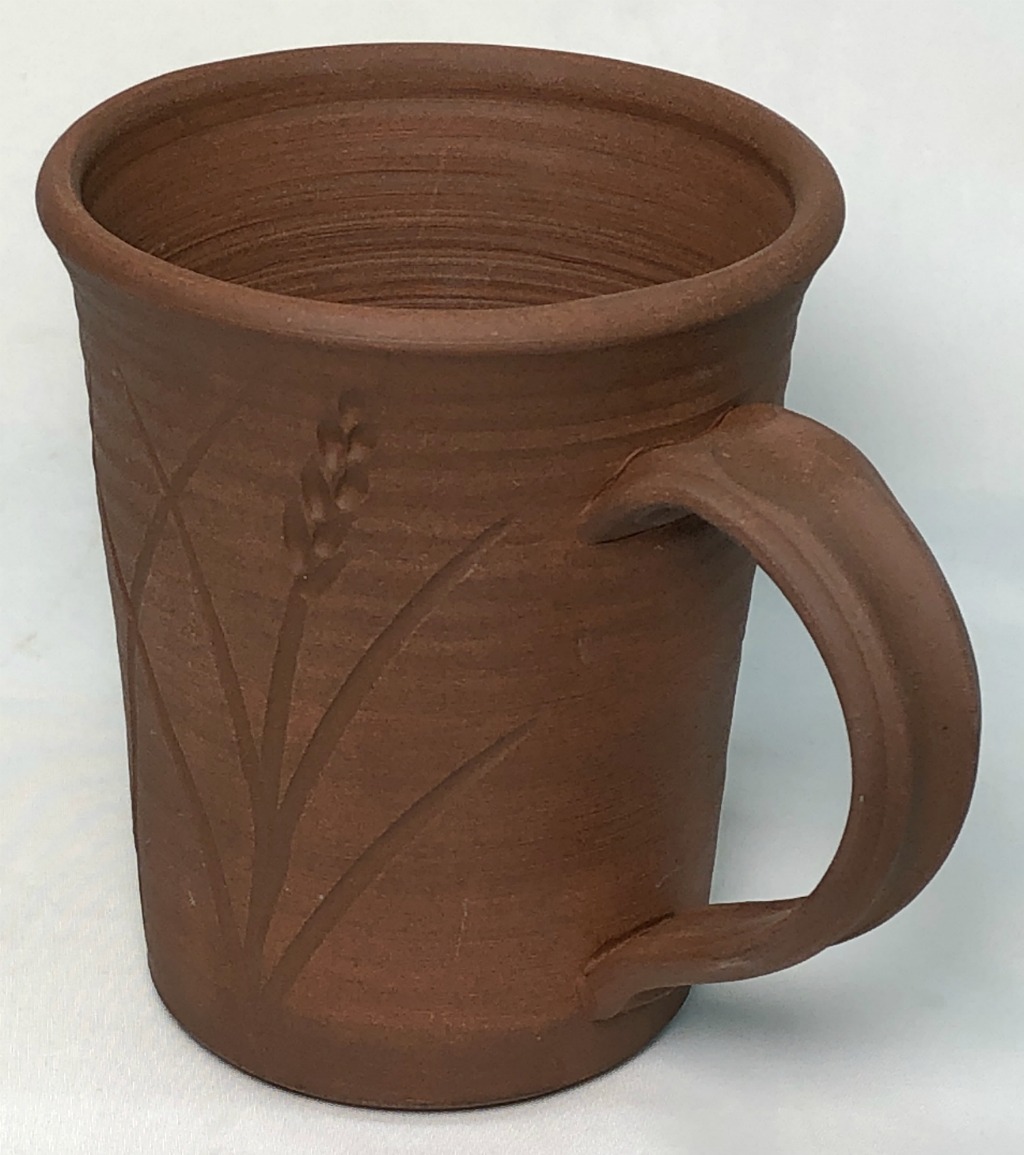
L4005C mug without glaze at cone 6
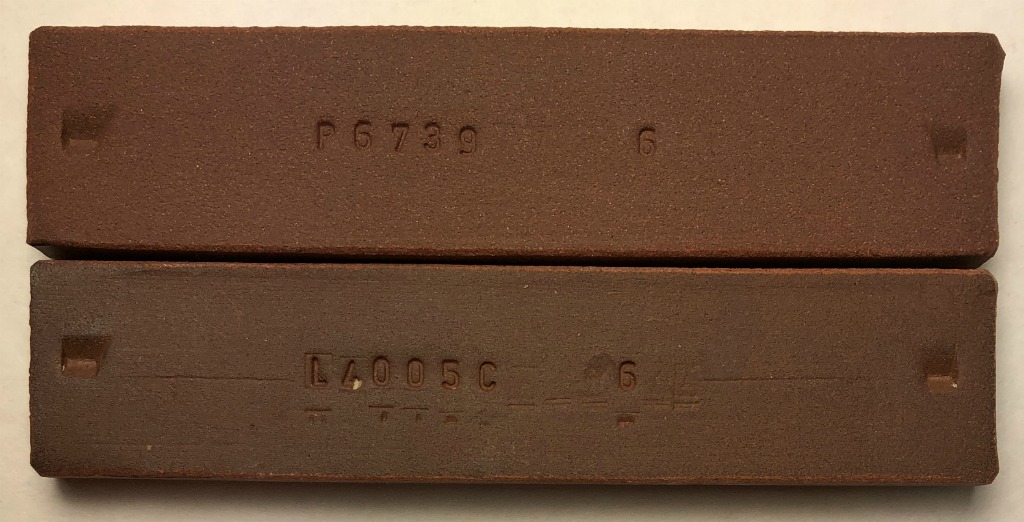
L4005C vs M390
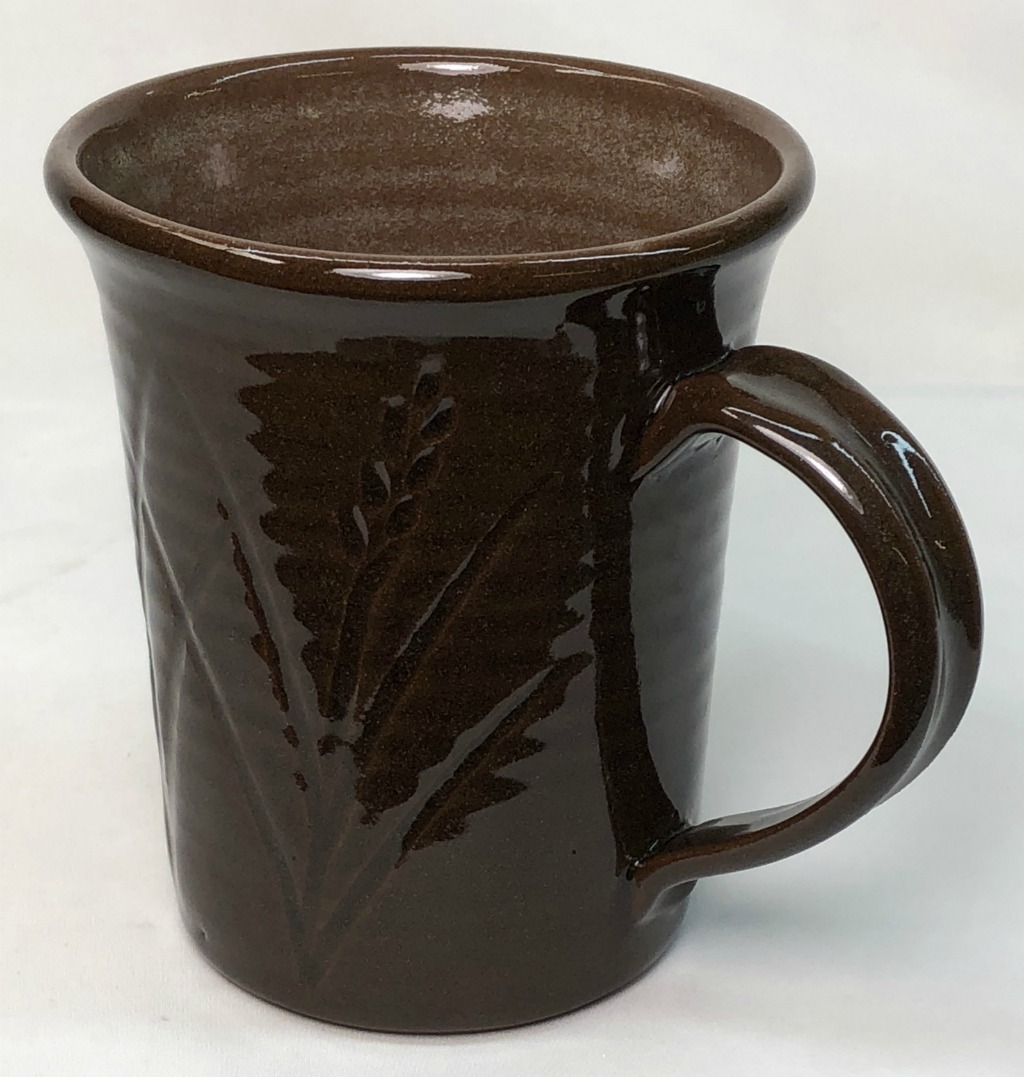
L4005C mug
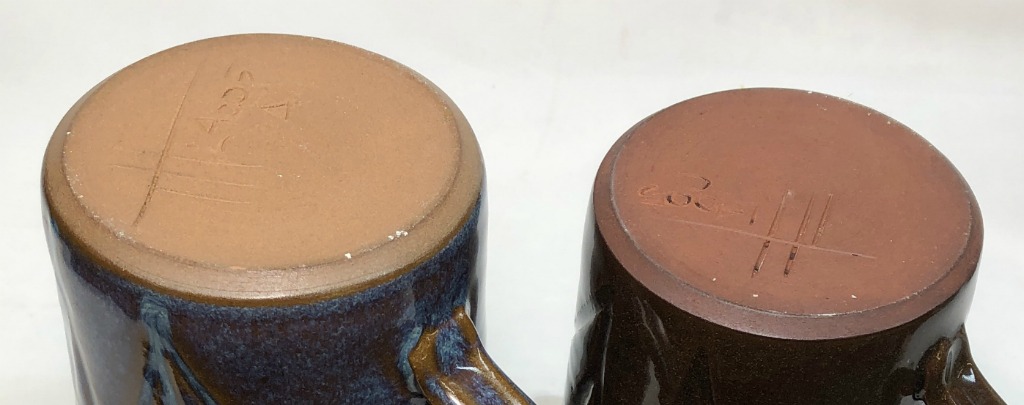
L4005A vs L4005C
L4005c fired bars
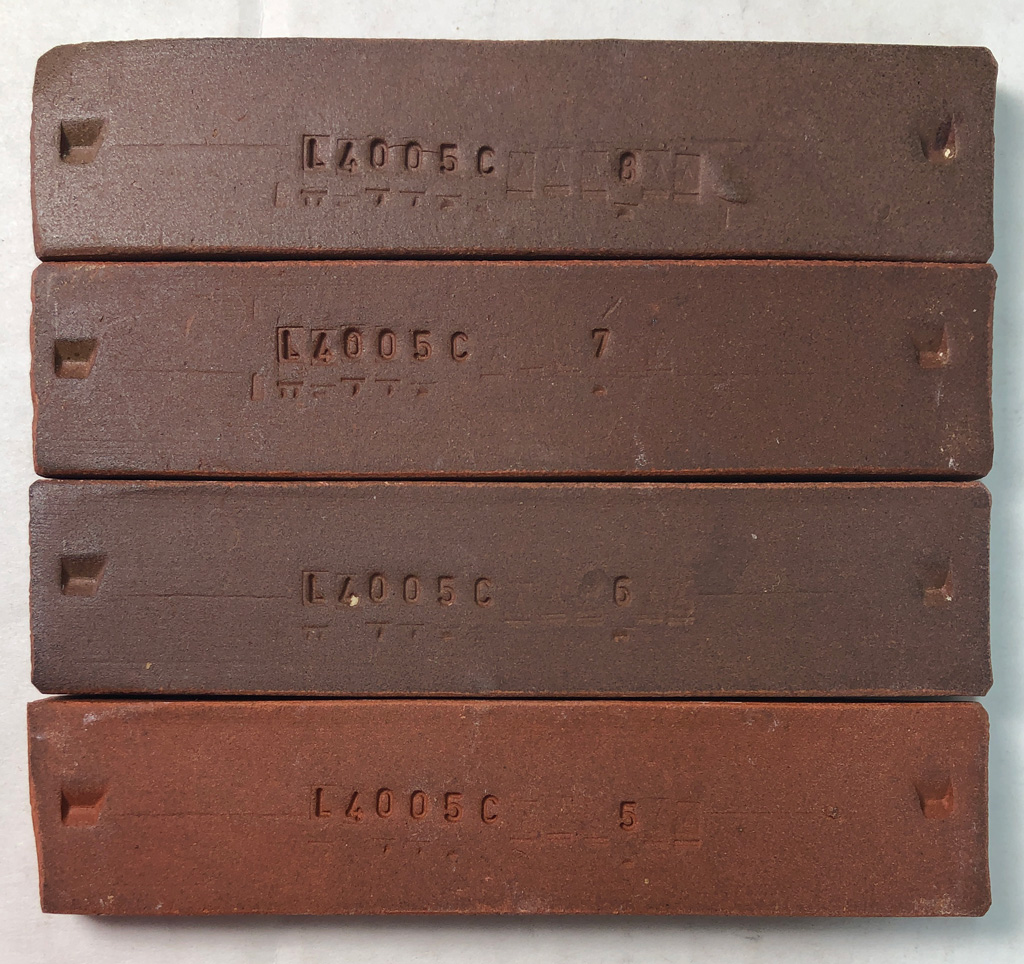
Testdata
SHAB - Shrinkage/Absorption
| DLEN | FLEN | FWT | BWT | CONE | DSHR | FSHR | ABS | |
| 8 | 94.32 | 87.55 | 38.26 | 38.43 | 8.0 | 5.7% | 7.2% | 0.4% |
| 7 | 94.18 | 87.34 | 38.25 | 38.56 | 6.7 | 5.8% | 7.3% | 0.8% |
| 6 | 94.13 | 87.26 | 38.04 | 38.7 | 6.0 | 5.9% | 7.3% | 1.7% |
| 5 | 94.09 | 87.35 | 37.91 | 38.9 | 5.0 | 5.9% | 7.2% | 2.6% |
| 4 | 94.04 | 6.0% |
XML (to paste into Insight)
<?xml version="1.0"?> <recipes version="1.0" encoding="UTF-8"> <recipe name="M390 Redart Throwing" id="154568" key="NzMGJgi4" date="2026-10-31" codenum="L4005C"> <recipelines> <recipeline material="M-23 Ball Clay" amount="55.000" tolerance=""/> <recipeline material="Silica" amount="10.000" tolerance=""/> <recipeline material="Redart" amount="35.000" tolerance=""/> <recipeline material="Iron Oxide Red" amount="2.000"/> </recipelines> </recipe> </recipes>
Born: 2017-09-05, Modified: 2026-10-31 01:37:00
z=kxbwgfY2QJ, id=154568, person_id=10, group_id=58
M390 Redart Casting
|
Code # L4005D |
Batch # -2 |
| Materials | Amt | Units | |
|---|---|---|---|
| KT #1-4 Ball Clay | 50.000 | GM | 49.02% |
| Silica | 15.000 | GM | 14.71% |
| Redart | 35.000 | GM | 34.31% |
| Iron Oxide Red | 2.000 | GM | 1.96% |
Total:102.00 (R)
Notes
The objective of this casting body is to emulate and be compatible with the plastic M390 produced by Plainsman Clays (of course, this recipe is usable by anyone as a stand-alone body for casting). This recipe employs 200 mesh refined mineral powders so it fires to a somewhat more homogeneous surface than M390 (the latter is made using 42 mesh quarried raw clays).
In this testing series we learned that it was not possible to get rich red color using only Redart as a dual-purpose flux and iron-source (using enough to get color ends up making the body fire too dense, turning it brown). Iron oxide is thus needed. But, at only 2%, there is minimal impact on the slurry (iron normally gels a slip).
This body fits our standard glazes well. The fired strength is outstanding. And cast pieces adhere to the standard M390 well. If pieces are thin and glazed only inside, special attention must be given to make sure the glaze is not under thermal compression.
This slurry is a delight to work with compared to many other red-burning ones. It does not gel during casting (if deflocculated appropriately), drains well, dries well. The ball clay has been switched to KT1-4, it delivers better casting properties.
We tried twice to deflocculate a batch using Darvan 811. Although it enabled 1.8SG, the casting rate was very slow and inner drain surfaces were rough.
Our best Darvan #7 recipe was 5000 powder, 2200 water, 27 Darvan to produce 3.85 litres at 1.77SG. It does cast somewhat slowly so pieces must be left in the mold long enough to acquire the desired thickness.
Pictures
L4005D fired color at cone 6
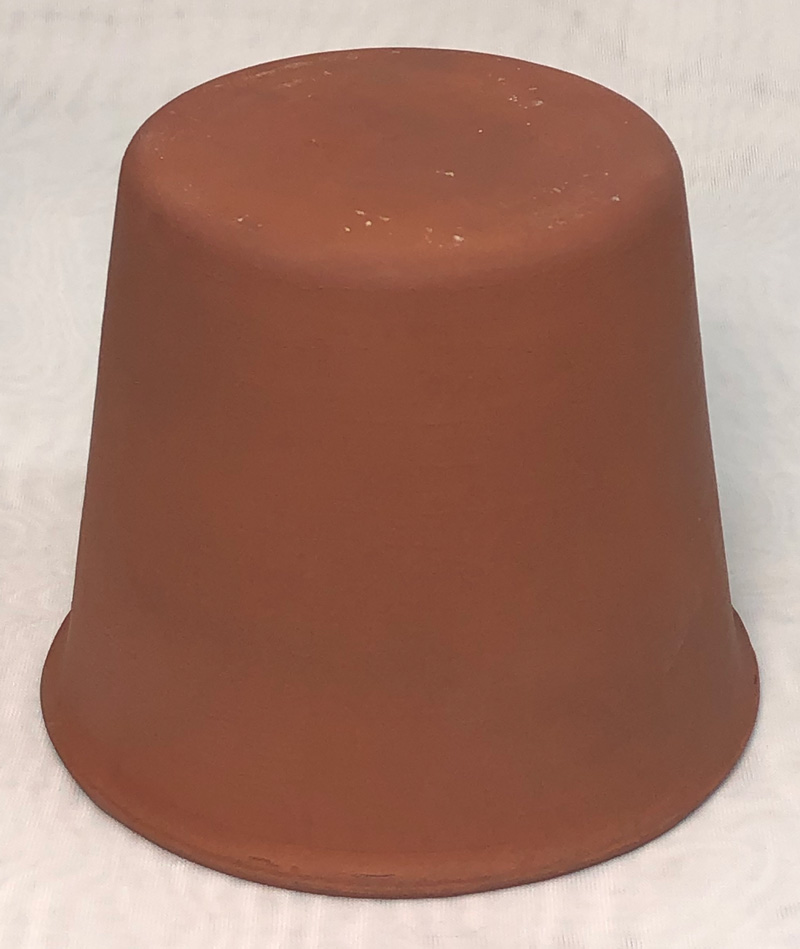
Beautiful warm red, very much like terra cotta. Casted very thin but fired strength is pretty good.
L4005D fired C6DHSC schedule

Inside glaze is Albany GA6-b.
Outside is G2934Y black.
L4005D handle, M390 mug, no glaze - Cone 6

The casting handle is not quite as bright red. If an exact match is needed more iron can be added to the recipe. However, keep in mind, that will likely produce more gelling in the slurry.
The handle survived repeated whacks with a hammer. It is stuck on well.
L4005D glaze compression testing
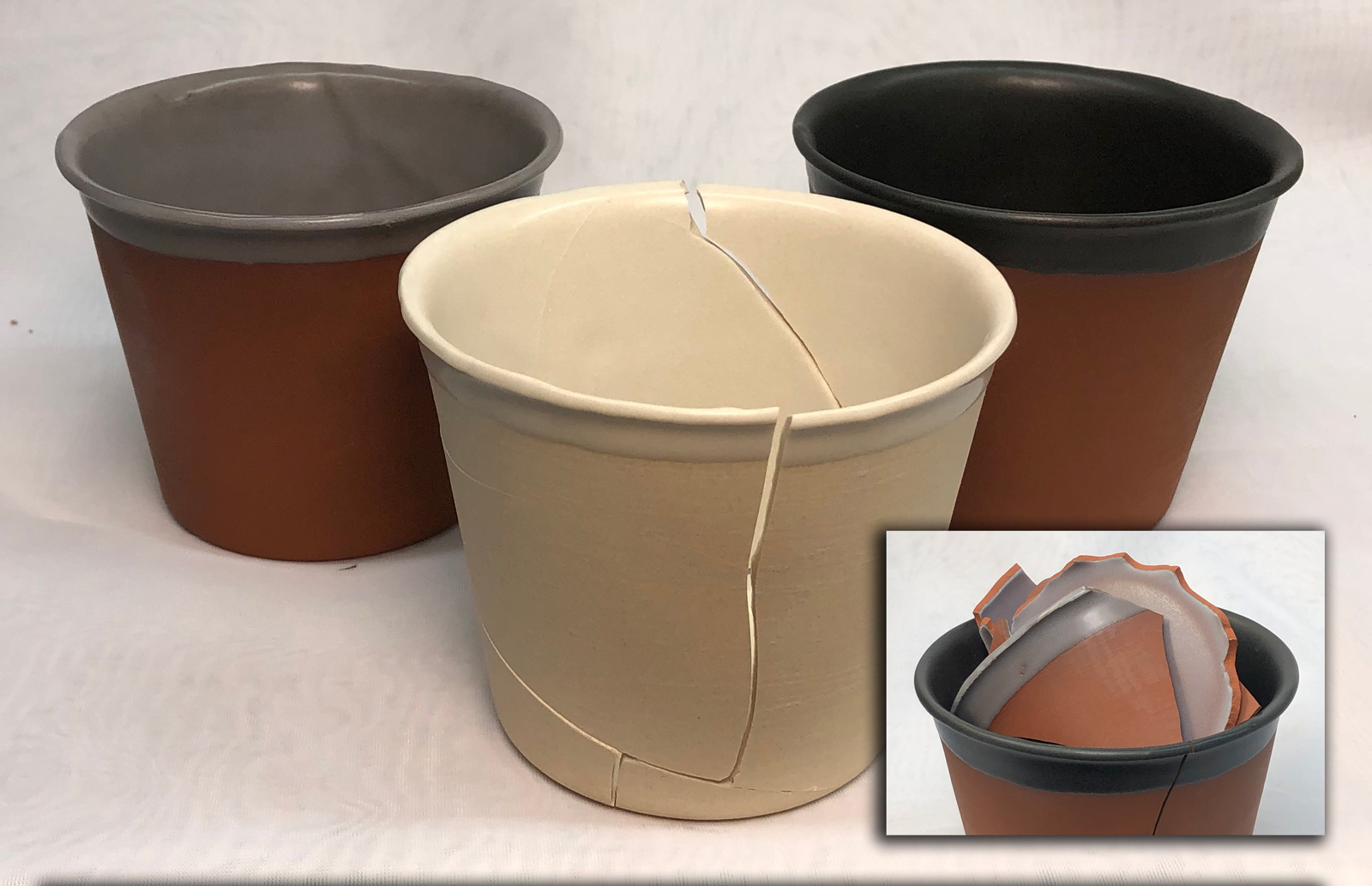
These thinly-cast pieces were glazed only on the inside using G1214Z (front), G2934 (left rear) and G2934Y black. Out-of-the-kiln the buff-burning body (M340 casting) was already broken. After a light tap with a hammer the G2934Y-glazed L4005D piece cracked vertically and the crack split open (because of pressure from the inside). The G2934-glazed piece shattered into about 15 pieces with a hammer tap. This means these glazes are clearly under compression, not in any danger of crazing. So ware needs to be much thicker to withstand the compressive forces. Or the glazes need to incorporate a little sodium to increase their thermal expansion.
L4005 Cone 6 casting body

Inside glaze is GA6-B, outside is GA6-C.
L4005D M390 Casting Version 5 fired bars

From from cone 8 to 4 (top to bottom).
L4005D fired to cone 4,6,7

Testdata
SHAB - Shrinkage/Absorption
| DLEN | FLEN | FWT | BWT | CONE | DSHR | FSHR | ABS | |
| 8 | 94.82 | 88.66 | 40.37 | 40.66 | 7.8 | 5.2% | 6.5% | 0.7% |
| 7 | 94.96 | 88.77 | 40.13 | 40.7 | 7.0 | 5.0% | 6.5% | 1.4% |
| 6 | 94.9 | 89.14 | 40.15 | 41.17 | 6.0 | 5.1% | 6.1% | 2.5% |
| 5 | 94.84 | 89.11 | 40.43 | 41.96 | 5.0 | 5.2% | 6.0% | 3.8% |
| 4 | 94.73 | 89.36 | 39.28 | 41.21 | 4.0 | 5.3% | 5.7% | 4.9% |
XML (to paste into Insight)
<?xml version="1.0"?> <recipes version="1.0" encoding="UTF-8"> <recipe name="M390 Redart Casting" id="184237" key="6wozxDr7" date="2026-10-31" codenum="L4005D"> <recipelines> <recipeline material="KT #1-4 Ball Clay" amount="50.000" tolerance="" unitabbr="GM"/> <recipeline material="Silica" amount="15.000" tolerance="" unitabbr="GM"/> <recipeline material="Redart" amount="35.000" tolerance="" unitabbr="GM"/> <recipeline material="Iron Oxide Red" amount="2.000" tolerance="" unitabbr="GM"/> </recipelines> </recipe> </recipes>
Born: 2017-09-05, Modified: 2026-10-31 01:37:07
z=6nas96i4XZ, id=184237, person_id=10, group_id=58
